7 Signs Your Diesel Truck's Turbocharger May Be Failing
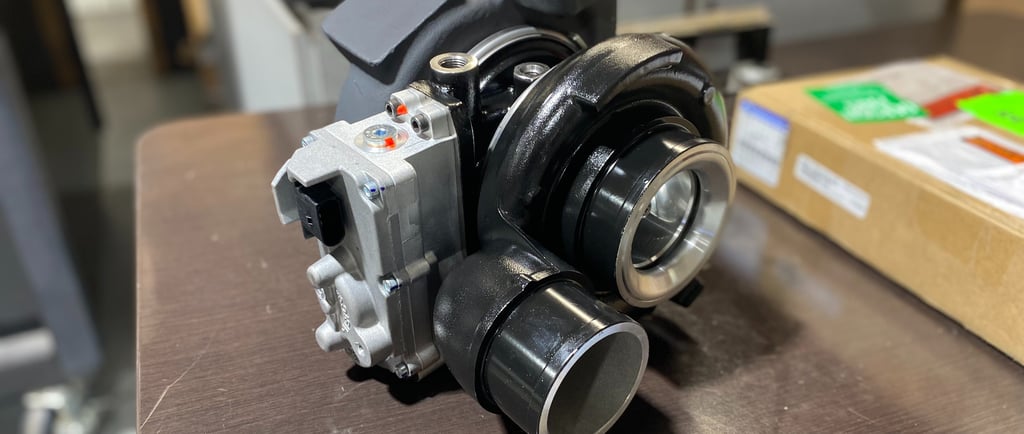
Turbochargers are one of the hardest-working components on a modern diesel engine. They play a critical role in delivering power, improving fuel efficiency, and helping your truck handle heavy towing and hauling demands. Whether you drive a Power Stroke, Cummins, Duramax, or EcoDiesel, your turbocharger is essential to your truck's performance.
6/11/20263 min read
7 Signs Your Diesel Truck's Turbocharger May Be Failing
Turbochargers are one of the hardest-working components on a modern diesel engine. They play a critical role in delivering power, improving fuel efficiency, and helping your truck handle heavy towing and hauling demands. Whether you drive a Power Stroke, Cummins, Duramax, or EcoDiesel, your turbocharger is essential to your truck's performance.
Unfortunately, turbochargers don't last forever. Like any mechanical component, wear and tear can eventually lead to failure. Recognizing the warning signs early can help prevent expensive engine damage and costly breakdowns.
At Perry's Auto & Diesel Repair, we regularly diagnose and repair turbocharger issues on diesel trucks throughout Middle Tennessee. Here are seven signs that your turbocharger may need attention.
1. Loss of Power
One of the first symptoms of a failing turbocharger is a noticeable loss of power.
If your truck feels sluggish, struggles while towing, or takes longer to accelerate, your turbo may not be producing the boost pressure your engine needs. A loss of boost can significantly impact overall performance and fuel economy.
Many drivers describe it as feeling like their truck has suddenly become "lazy" or "underpowered."
2. Excessive Black Smoke
Diesel engines naturally produce some exhaust smoke under heavy load, but excessive black smoke is often a warning sign.
When a turbocharger isn't supplying enough air to the engine, the fuel-to-air ratio becomes unbalanced. The result is incomplete combustion and excessive black exhaust smoke.
If you're noticing more smoke than usual, especially during acceleration, it's time for a professional inspection.
3. Whining, Siren, or Whistling Noises
Turbochargers naturally make some noise while building boost, but unusual sounds should never be ignored.
Common warning sounds include:
High-pitched whining
Siren-like noises
Excessive whistling
Metal-on-metal sounds
These noises can indicate worn bearings, damaged compressor wheels, or internal turbocharger wear.
4. Increased Oil Consumption
Turbochargers rely on engine oil for lubrication and cooling.
As seals begin to wear, oil can leak into the intake or exhaust system. This often leads to increased oil consumption between oil changes.
If you're adding oil more frequently than normal, a leaking turbocharger could be one of the causes.
5. Blue Exhaust Smoke
Blue smoke typically indicates that engine oil is being burned during combustion.
When turbo seals fail, oil can enter the intake system and eventually make its way into the combustion chamber. This often results in blue or blue-gray exhaust smoke.
Ignoring this symptom can eventually lead to catalytic converter, DPF, and emissions system problems.
6. Check Engine Light and Boost Codes
Modern diesel trucks continuously monitor turbocharger performance.
When boost pressure falls outside of expected parameters, the engine control module may trigger a check engine light and store diagnostic trouble codes.
Common turbo-related issues include:
Underboost conditions
Overboost conditions
Variable vane actuator faults
Boost pressure sensor issues
Turbocharger control system failures
Professional diagnostics can quickly identify the root cause of these problems.
7. Reduced Fuel Economy
A failing turbocharger often forces the engine to work harder to achieve the same performance.
As efficiency decreases, fuel consumption increases. If you've noticed a sudden drop in fuel mileage without changes in driving habits, turbocharger issues may be contributing to the problem.
What Causes Turbocharger Failure?
Several factors can shorten turbocharger life, including:
Infrequent oil changes
Low oil levels
Poor-quality oil
Dirty air filters
Foreign object damage
Excessive heat
Towing heavy loads without proper maintenance
Following your diesel truck's maintenance schedule is one of the best ways to maximize turbocharger lifespan.
Why Early Diagnosis Matters
Turbocharger problems rarely improve on their own. In many cases, a small issue can quickly turn into a major repair.
A failing turbo can lead to:
Reduced performance
Increased fuel costs
Engine damage
Emissions system failures
Unexpected breakdowns
Addressing problems early often results in lower repair costs and less downtime.
Trust Perry's Auto & Diesel Repair for Diesel Turbocharger Service
If your diesel truck is experiencing power loss, excessive smoke, unusual noises, or a check engine light, don't wait for the problem to get worse.
At Perry's Auto & Diesel Repair, our experienced diesel technicians have the equipment and expertise to diagnose turbocharger issues on Power Stroke, Cummins, Duramax, and other light-duty diesel engines. We'll identify the cause of the problem and recommend the most cost-effective repair solution.
Whether you use your truck for work, towing, or everyday driving, we're committed to keeping your diesel running strong for years to come. Contact Perry's Auto & Diesel Repair today to schedule a diesel diagnostic inspection.
Leave Us a Message
© 2026 Perry's Auto & Diesel Repair. All rights reserved. Website courtesy of Mid Tenn Digital Marketing.
Your Dealership Alternative
Contact Us
120 Deery Street
Shelbyville, TN 37160
Call: (931) 684-5540
Text: (931) 219-2976
*For fastest possible service, please schedule an appointment with a service advisor prior to arrival*
Quick Links